

Surface disinfection: state of the art
I've written this post to get my mind into gear for Dr Curtis Donskey's Insight Webinar on this topic later this week (register here). Over the last two decades, the evidence supporting the importance of surface contamination in the transmission of the microbes that can cause HCAI and perpetuate AMR has become increasingly difficult to ignore. In fact, I’d argue that environmental hygiene sits at the centre of how pathogens move through healthcare systems. And yet, despite the importance of the surface contamination, there remains surprisingly little consensus on the best approaches to cleaning and disinfection.
From cauliflower to contaminated surfaces
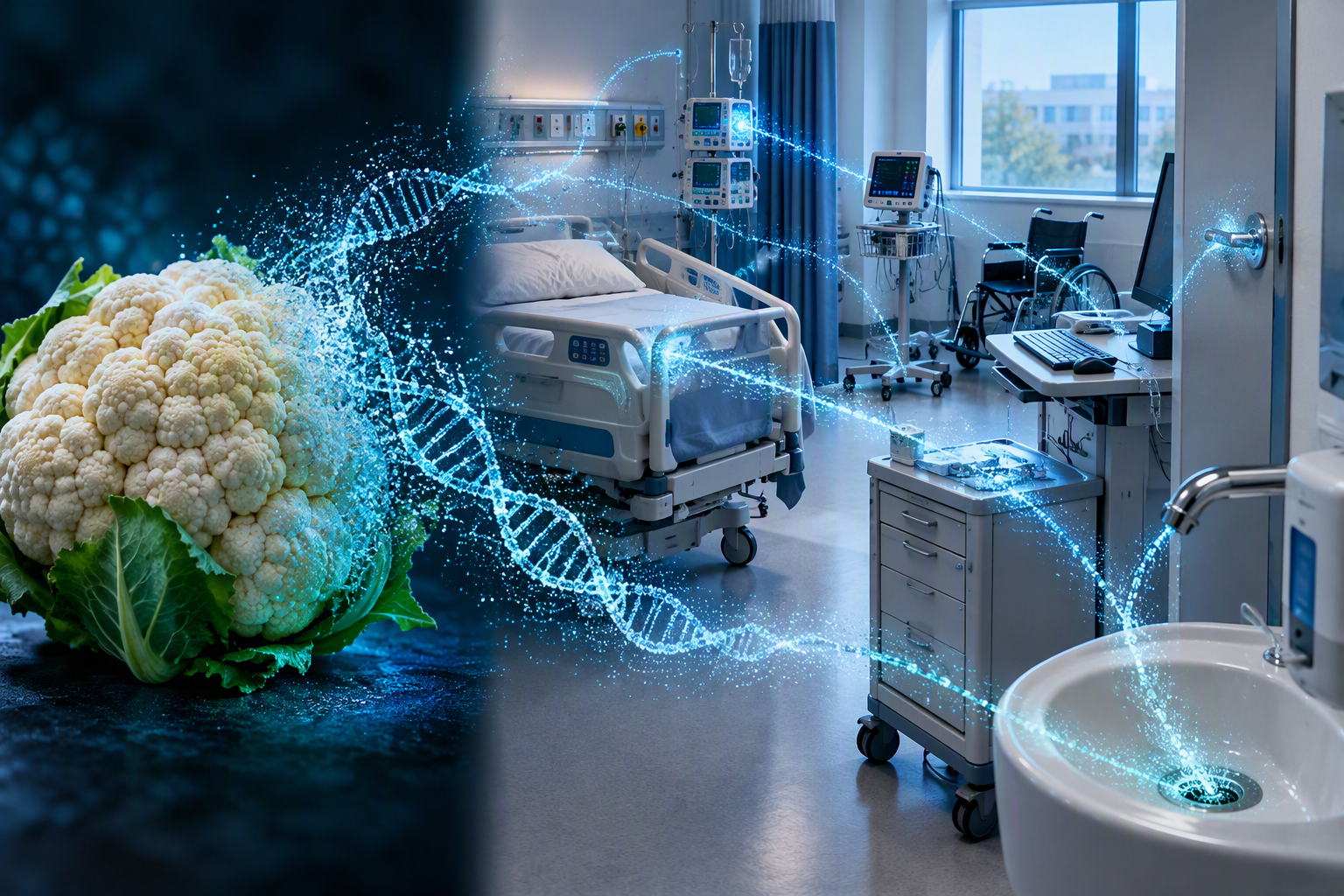
When I teach about environmental transmission, I often start with a cauliflower. Some classic studies undertaken in the 1990s used harmless surrogate marker made from cauliflower DNA inoculated into a single location in a neonatal intensive care unit. Within hours, contamination had spread throughout the unit, reaching equipment, workstations and multiple patient care areas. Whilst you can argue that cauliflower DNA is not a great way to model the spread of microbes in hospitals, it’s perhaps not so different from a simple non-enveloped virus. And it provides powerful proof-of principle. The same concept has been picked up fruitfully by Dr Curtis Donskey’s research group.
Surface contamination as a transmission pathway
For years there was debate about whether contaminated surfaces were merely markers of colonised patients or whether they actively contributed to transmission. In my view, this debate has been settled. Pathogens are shed into the environment and important healthcare pathogens can survive for prolonged periods in the environment. Some survive for days, others for weeks, and some for months. This means contaminated surfaces cannot simply be ignored while waiting for organisms to disappear naturally.
We know that healthcare workers frequently acquire pathogens on their hands after touching contaminated surfaces, even without direct patient contact. Studies involving MRSA, VRE and Clostridioides difficile have repeatedly demonstrated this phenomenon. And so there is a dynamic interchange between contamination of patients, surfaces, and the hands of healthcare workers.
Perhaps the strongest evidence comes from studies examining prior room occupants. If the previous patient in a room was colonised or infected with an MDRO, the next patient is significantly more likely to acquire the same organism. The contaminated environment of the room itself becomes a risk factor. In this systematic review and meta-analysis, the pooled acquisition odds ratio (OR) for all the organisms across all studies was 2.45. This means that incoming occupants when the prior room occupant had an MDRO were more than 2x more likely to acquire the MDRO!
One question we still don’t have clarity on is the extent to which surface contamination contributes to spread (and therefore where the focus of our investment in interventions should be). I heard recently at a conference that “only 2% of patients have a prior room occupant positive for an MDRO, so the increased risk is not a very significant finding”. On the one hand, I agree, but this represents only part of the risk posed by contaminated surfaces. Another way to scale the importance of surface contamination is to look at the impact of environmental interventions. For example, a fairly recent study evaluated the impact of implementing antimicrobial surface coatings. In the intervention units, the coating was associated with a 36% reduction in combined healthcare-associated infections (MDRO bloodstream infections and C. difficile infection) alongside substantial reductions in environmental bioburden (75-79%). No comparable reduction was seen in control units. So, this suggests that 33% of HCAI were linked to surface contamination!
Cleaning and disinfection is an effective intervention
I still hear people talk about environmental hygiene as if we’re not quite sure whether or not cleaning and disinfection is an effective intervention. The evidence base is now substantial – I'd even go so far as to say irrefutable. Studies over many years have demonstrated reductions in MRSA infection, VRE acquisition and other healthcare-associated infections following improvements in environmental cleaning and disinfection through enhanced cleaning and disinfection processes, automated room disinfection, and product switches improved disinfection protocols have all demonstrated benefits.
Shared equipment: the missing link?
When we discuss environmental hygiene, we often think about fixtures in patient rooms (walls, floors, door handles etc). But probably the most important surfaces in terms of transmission are the plethora of shared medical equipment that is required for modern healthcare. Blood pressure machines, observation trolleys, ultrasound devices, wheelchairs and countless other items move between patients throughout the day. These objects can act as vehicles for transmission if cleaning and disinfection processes are inconsistent (or sometimes, lets face it, non-existent!). As if to drive home this risk, a recent randomised study (the CLEEN study) demonstrated that adding dedicated cleaning time for shared mobile medical equipment resulted in a significant reduction in healthcare-associated infections. And the scale of impact in this study? 35% (very similar to the antimicrobial surfaces study cited above).
I think the fact that I can point to evidence around the cost-effectiveness of cleaning and disinfection illustrates the maturity of the evidence base. Here, for example, the CLEEN study was shown to be cost-effective.
How many other interventions in the world of IPC are backed up by RCTs and cost-effectiveness analyses? Hand hygiene certainly isn’t! (Not saying hand hygiene isn’t important, for the record!)
Rethinking detergents and disinfectants
Despite the accumulated evidence over many years, there is not broad consensus one some key issues in terms of developing a programme of hospital cleaning and disinfection. Should we use a detergent most of the time and step up to a disinfectant when there are known infection risks? And which disinfectant chemistry is “best”?
I am for the universal use of a disinfectant. Many patients carrying important pathogens are not recognised immediately. Complex healthcare environments are difficult to clean thoroughly. Dry surface biofilms are commonplace. Emerging evidence suggests routine disinfection may reduce transmission risk more effectively than detergent-only approaches in some settings.
And when it comes to disinfectant chemistries, there is no “best” chemistry, but we need to look beyond the traditional sodium hypochlorite / NaDCC approach. Contact time, soiling, material compatibility, ease of use and practical implementation may be as important as chemistry itself. Chlorine remains widely used, but it also has limitations. Efficacy can be affected by organic soil, material compatibility issues remain a concern, and not every product marketed as sporicidal performs equally well under realistic conditions.
The rise of sinks and drains
No review of the ‘state of the art’ would be complete without mentioning sinks and drains. Over the last decade, drains have emerged as one of the most important environmental reservoirs for antimicrobial-resistant organisms. These wet, nutrient-rich environments support biofilm formation and can act as long-term sources of contamination. The “sink splash zone” provides a very plausible route through which key microbes can escape sink and drain biofilms and re-enter the clinical environment at critical control points. Equipment, consumables, patient care items, and sometimes patients themselves are frequently stored close to sinks, where splash and aerosol generation create opportunities for contamination.
There is evidence that proximity to sinks is associated with higher rates of HCAI. And also that improved management of sinks and drains can CPE reduce transmission and infection. This has driven increased interest in technologies designed specifically for drain decontamination, including thermal, chemical and physical approaches.
Where next?
The story of surface disinfection has really unfolded over the last 20 years. We are no longer (or at least should not be) asking whether contaminated surfaces contribute to transmission, or whether cleaning and disinfection work. The evidence now shows that environmental contamination is an important and modifiable driver of HCAI and AMR. But questions remain over design environments that are inherently less prone to transmission, ensuring that shared equipment receives the same attention as patient rooms, and the best way to select the most effective disinfectants, technologies and monitoring approaches to deliver the greatest benefit in real-world clinical settings.
Subscribe
Subscribe to our email list if you’d like us to let you know about future Journal Clubs, Insight Webinars, and for other updates from IPC Partners.
This website uses cookies to improve your experience. Learn more